Hard fork vs soft fork, and what each one does to a miner
The difference is whether software that has not upgraded still accepts the new blocks. That single answer decides everything else.
A fork is a rule change, nothing more dramatic
A blockchain is a set of rules that everyone runs the same copy of. A fork is what happens when those rules change. The word sounds like a crisis, and most forks are routine maintenance that nobody outside the developers notices.
There is exactly one question that separates the two kinds, and every other difference follows from it: does software that has not upgraded still accept blocks made under the new rules?
Hard fork: the rules loosen, old software refuses
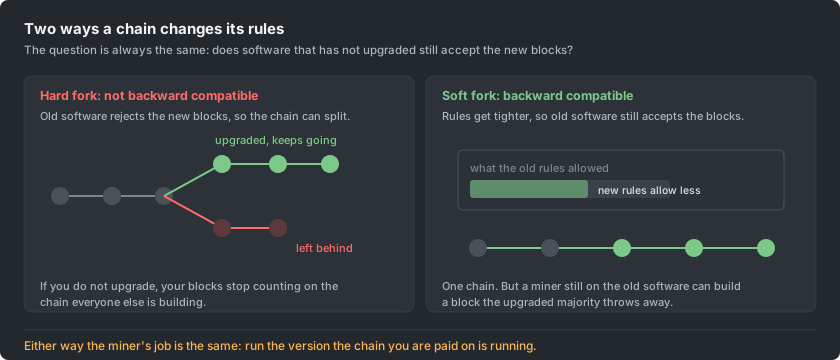
A hard fork allows something the old rules did not. Maybe a larger block, a new transaction type, a changed reward schedule. Because the new blocks do something previously forbidden, software running the old rules looks at them and rejects them as invalid.
That is what makes it not backward compatible, and it is why a hard fork needs everyone to move together. If everyone upgrades, there is one chain and the change simply takes effect. If a meaningful group does not, there are two chains from that block onward, each valid under its own rules and each ignoring the other.
Soft fork: the rules tighten, old software agrees
A soft fork forbids something the old rules allowed. The new blocks are a subset of what was already valid, so old software examines them, finds nothing it objects to, and accepts them. Nobody is forced off the chain by refusing to upgrade.
The catch runs the other way. A miner still on the old software can produce a block that is fine by the old rules but breaks the new, tighter ones, and the upgraded majority will reject it. The block is not just late, it is thrown away, along with everything spent finding it.
This is why soft forks are usually activated only once a large majority of hashrate signals it is ready. The upgrade is coordinated so that the minority left behind is small enough that it notices quickly and moves.
What a split actually means for your payouts
If a chain genuinely splits, two things follow that matter to a miner more than the politics of why it split.
The hashrate divides between the branches, so both are less secure than the single chain was, and both see slower blocks until difficulty adjusts. That adjustment takes time, and during it a branch with a small share of the hashrate can produce blocks very slowly indeed.
The other is that your coins exist on both branches, because both share the history up to the split. Whether the second branch is worth anything is a market question and often the answer is very little. Exchanges are usually cautious with deposits around a fork, which is worth remembering if you were planning to sell.
Forks that create a new coin, and forks that do not
Most forks change one chain and leave one chain. The famous exceptions are the ones where a group deliberately kept the old rules alive as a separate coin, which is where several well known coins came from.
A useful distinction: a planned network upgrade that everybody adopts is a hard fork in the technical sense and produces no new coin at all. The upgrade is the point, and the fork is just the mechanism. Only a fork where two groups both keep building leaves two coins behind.
The practical rule for a miner
You do not need to follow the debate. You need to run the software the chain you are paid on is running, and to know when that changes.
- Watch the coin's own announcement channel for activation heights. A fork lands at a stated block height, not at a stated time, and that is the number to note.
- If you mine on a pool, the pool runs the node and handles the upgrade. Your miner is unaffected in the ordinary case, because you are sent work; you do not validate blocks yourself.
- If you mine solo against your own node, upgrading that node is your job, and doing it late means mining a chain nobody accepts.
- Around a contentious fork, expect your earnings estimate to be wrong for a while. Difficulty, price and which chain the pool follows can all move in the same week.