Vardiff and static share difficulty
How the pool tunes your share difficulty automatically, why your earnings never change with it, and the rare cases for pinning a value.
What vardiff does
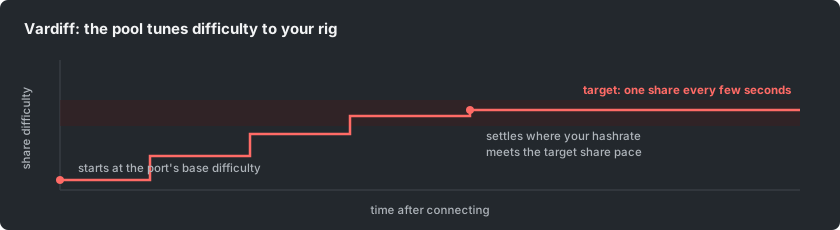
Share difficulty decides how hard a single share is to find. The pool's variable difficulty (vardiff) watches how fast your rig submits and retunes the difficulty until shares arrive at a steady target pace: a big rig gets harder shares, a small rig easier ones. Your EARNINGS do not change either way, because a harder share counts for proportionally more; only the submission rhythm changes.
Why a steady pace matters
Too easy a difficulty floods the pool and your connection with tiny shares; too hard a difficulty means shares so rare that your dashboard hashrate swings wildly and a restart wastes more in-flight work. The target pace is the balance point, and for almost everyone vardiff finds it better than a hand-picked number.
When a static difficulty helps
Pinning a fixed difficulty (where the pool supports it, via the port or a login suffix) is useful in a few real cases: proxy setups aggregating many small workers, rental marketplace power that behaves badly during retarget steps, and benchmarking where you want share counts comparable across runs. If none of those is you, leave vardiff on.
When static hurts
A fixed difficulty far below your rig's natural level wastes bandwidth and pool capacity for zero extra earnings; far above it, your stats become noisy and slow to converge. If you do pin a value, start from the difficulty vardiff settled on (visible in your miner's console) rather than a guess.