Hashrate marketplace vs mining pool: which one actually pays you
A pool pays you in outcomes and a marketplace pays you a rate. Same hardware, different product, and a different risk each way.
They are not two versions of the same thing
A mining pool and a hashrate marketplace both take your hashrate and give you money back, which is where the similarity stops. They sell different products, and reading one as a variant of the other is how people end up disappointed by whichever they chose.
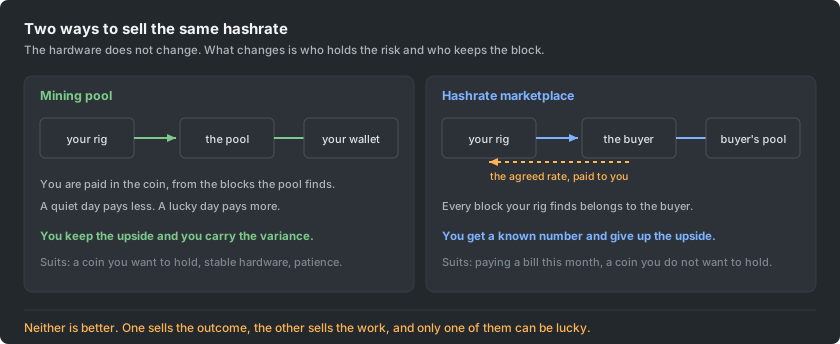
On a pool, you are mining. The pool combines your work with everyone else's, finds blocks, and pays you a share of what those blocks earned. On a marketplace, you are renting your machine out. Somebody else buys your hashrate at an agreed rate, points it wherever they like, and keeps every block it finds.
The pool: paid in outcomes
You are paid in the coin, out of blocks that actually happened. If the round is long, you earn less that day; if it is short, more. Over time that averages out to what the coin is genuinely paying, and the pool statistics show you the luck that produced it.
What this buys you is the upside. You hold the coin, so if it appreciates you appreciate with it, and if the chain has a busy day full of fees you get a share of those fees. You also carry the variance, which on a small pool or a slow chain is not a small thing.
The marketplace: paid a rate
You are paid whatever was agreed for the hashrate you delivered, and the blocks are not yours. If the buyer gets lucky and hits three blocks in an hour, that is their luck. If they find nothing all day, they still owe you.
The payment is usually in a major coin rather than the one being mined, which some people want and others do not. What you have really done is convert a variable, coin denominated income into a steadier one, and paid for that with the upside.
The rate itself is not fixed either. It is a market, so it rises when buyers are competing and falls when they are not, and it can move sharply over a day.
What the marketplace price actually tracks
A buyer will not pay more for your hashrate than they expect it to earn them, minus their margin. So the rate follows what mining that algorithm is worth right now, which is the hashprice for the coins buyers are pointing it at.
The consequence is that a marketplace does not escape the market, it repackages it. If mining is unprofitable everywhere, the rate falls too. What you are buying is not a better price, it is a known price, delivered today instead of averaged over a month.
The one situation where a marketplace pays clearly better is a short lived spike: a new coin launch or a burst of buying interest that lifts rates well above what steady mining returns. Those windows are real and they are brief.
The costs each side does not advertise
- Marketplace fees are taken from the seller, and there is usually a payout threshold and a withdrawal fee on top. Check all three before comparing headline rates against a pool fee.
- Marketplace work can be cancelled. An order ends, and the rig sits idle until the next one starts. Idle time is not paid and it does not appear in the advertised rate.
- A pool has variance, which costs you nothing on average but can be uncomfortable at small hashrate. Solo is the extreme version of the same trade.
- A pool has a payout threshold too, and on a small rig that is the thing that decides how often you actually see coins.
- Neither side removes your electricity bill, which is usually larger than the difference between them.
Choosing, and changing your mind
Take the marketplace if you want a predictable number this month, if you do not want to hold the coin, or if rates have spiked above what mining returns. Take the pool if you want the coin itself, if you are content to let variance average out, or if you would rather not depend on somebody else's buying appetite.
It is not a permanent decision. The same rig can point at a pool today and at a marketplace next week, and plenty of people move it based on which is paying better. The rented hashrate guides on this site cover the practical side of pointing rented or marketplace hashrate at a pool, which is the same question seen from the buyer's end.