PPS vs PPLNS vs PROP: payout schemes explained
The three reward schemes explained in plain English: what PPS, PPLNS and PROP each pay, who carries the risk, and which suits your rig.
PROP (proportional)
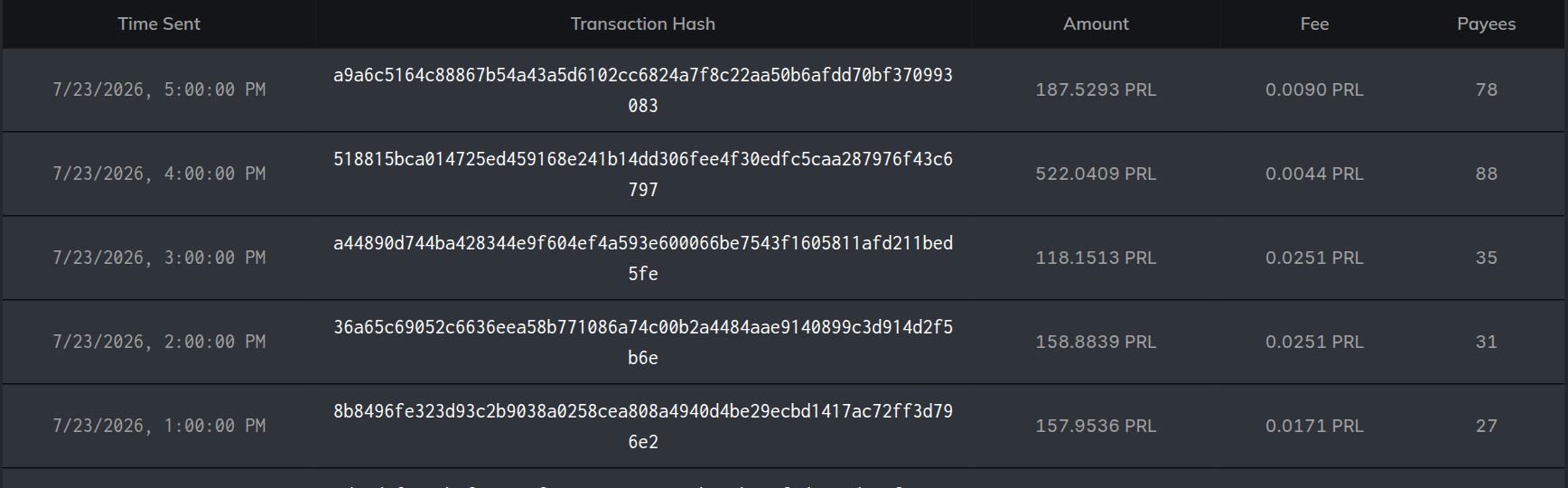
In a proportional scheme, you earn from each block the pool actually finds, split in proportion to the shares you contributed to that round. Your income tracks the pool's real luck: steady across many blocks, with the small natural wobble of variance. Whether this pool is running it, and at what fee, is shown live on the pool statistics.
PPS (pay per share)
In a pure pay-per-share scheme, the pool pays a fixed amount for every valid share you submit, regardless of whether the pool found a block. That removes luck from your income entirely, but the pool takes on all the variance and usually charges a higher fee to cover it. You get smoothness; you pay for the insurance.
PPLNS (pay per last N shares)
PPLNS pays out when a block is found, but weighs the last N shares before that block, not just the current round. It rewards steady, loyal miners and resists pool-hopping, at the cost of slightly more complex, luck-linked payouts. It sits between PROP and PPS in behaviour.
Which is best for you
There is no universally best scheme, only trade-offs. PPS buys smoothness for a higher fee; PPLNS rewards consistency; PROP keeps it simple and transparent, paying you exactly your share of what the pool earns. For most miners a low-fee pool is the clearest deal whichever of these it runs, and the scheme this one runs is shown live on the pool statistics.