Pool luck and orphan blocks explained
What block effort and pool luck really mean, why an unlucky streak is normal variance, and what an orphaned block costs the round.
Luck is just variance
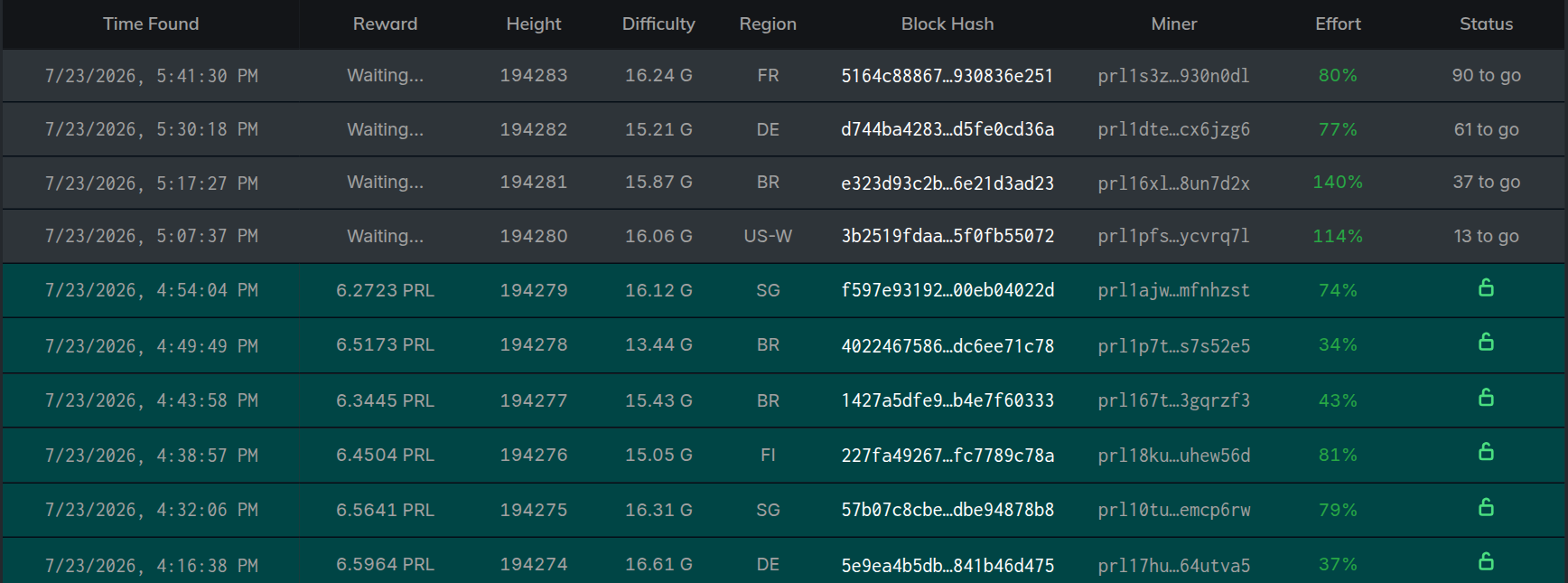
Finding a block is a random event, like rolling for a rare result over and over. Sometimes the pool finds a block far sooner than the difficulty says it should (good luck), sometimes later (bad luck). Effort is the number that measures this: under 100% means the block came early, over 100% means it came late. Single blocks swing widely; across many blocks it averages toward 100%.
What an orphan block is
Occasionally two miners anywhere on the network find a valid block at nearly the same moment. The network can only keep one of them on the main chain, and the other becomes an orphan (sometimes called a stale block). An orphaned block pays nothing, because it never became part of the accepted chain.
Why orphans are normal and fair
Orphans happen on every blockchain and to every pool; they are a property of how distributed consensus resolves ties, not a fault of the pool or your rig. On this pool orphaned blocks are marked as such and are automatically excluded from your confirmed block count, so your dashboard only ever counts the blocks that actually paid.
The bottom line
Luck and the occasional orphan add short-term noise, but they do not change the long-run maths. Over enough blocks, effort trends to 100% and the orphan rate is small and steady. This is exactly why pool mining exists: it smooths that variance into regular payouts instead of leaving you exposed to it alone.