What is network difficulty?
How a blockchain keeps blocks arriving at a steady pace, what difficulty means for your odds, and why it constantly moves.
The self-adjusting dial
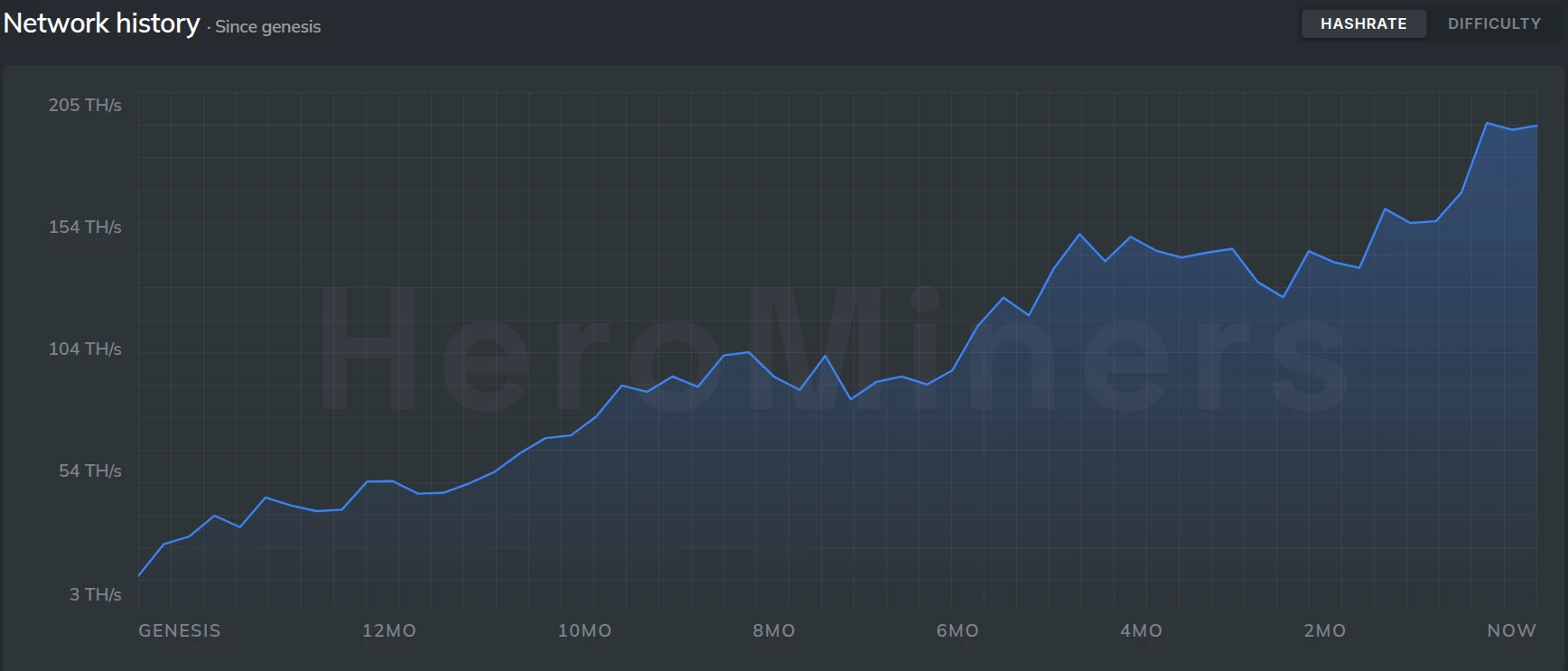
Network difficulty is how hard it currently is to find a block. The network adjusts it automatically so that blocks keep arriving at roughly a target pace no matter how much mining power is online. If more miners join, difficulty rises; if they leave, it falls.
What it means for you
Higher difficulty means each unit of your hashrate finds blocks less often, so your share of the rewards depends on your hashrate relative to the whole network, not on the difficulty by itself. When difficulty rises because others joined, your slice of the pie shrinks a little; when it falls, your slice grows.
Difficulty versus share difficulty
Do not confuse network difficulty with the share difficulty the pool assigns your rig. Network difficulty is what a real block must beat. Share difficulty is a much lower bar the pool sets per rig so you submit shares at a steady pace, purely for measuring your contribution. They are different numbers doing different jobs.
Why it feeds the calculator
Because difficulty sets how often blocks are found, it is a key input to any earnings estimate. That is why a mining calculator reading can change day to day even if your hashrate is constant: the network moved, not your rig.