Why we show stale shares
What a hidden stale share costs you, how this pool reports staleness openly, and how to use the number instead of fearing it.
The uncomfortable mechanics
A stale share is valid work that arrived after the network had already moved on. It earns nothing, on any pool, because it can no longer contribute to a block. The only questions are whether the pool TELLS you, and what percentage you are running at. A pool that hides staleness does not make it stop costing you; it makes the cost invisible.
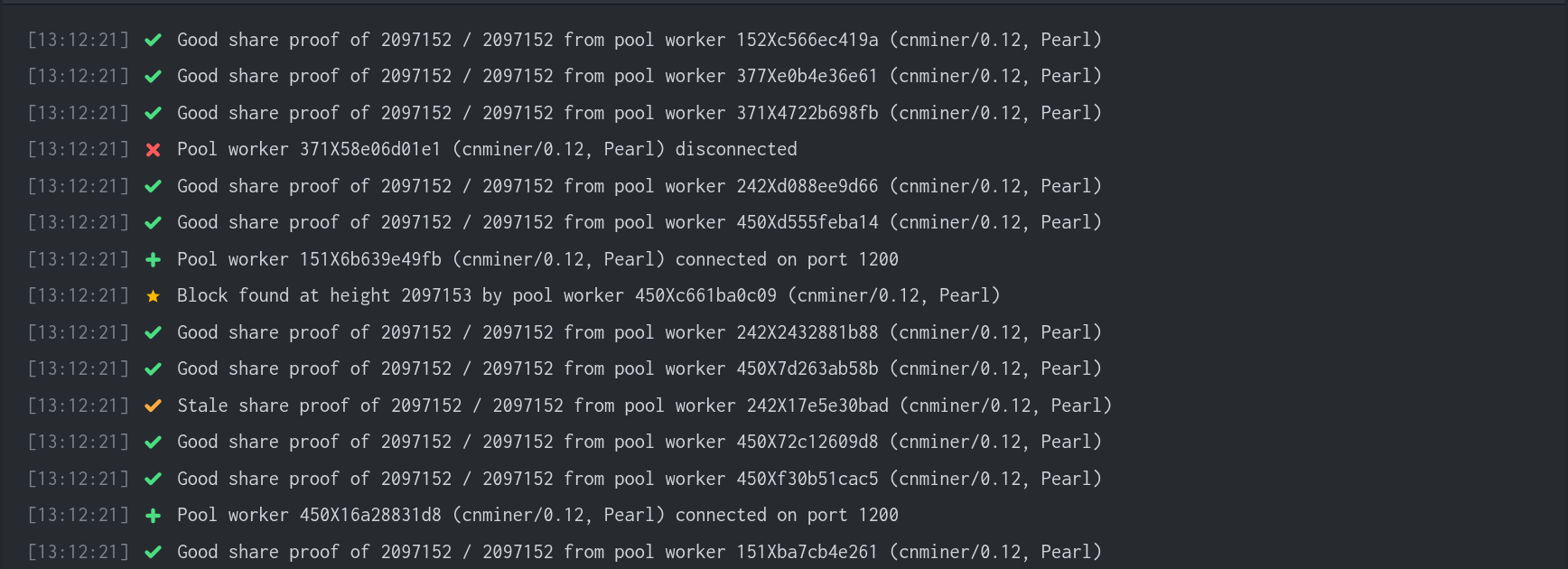
Why some pools hide them
A pool that silently accepts stale shares (or folds them into a padded "effective hashrate") shows you a prettier number than a pool that reports honestly, while paying you from the same real work. In a side-by-side trial the honest pool looks worse on the dashboard and pays the same or better in the wallet. Knowing this changes how you compare pools: compare wallets over weeks, not dashboards over hours.
How staleness is reported here
Your dashboard reports your shares as the pool judged them, the Live tab streams each event as it happens, and your stale percentage is derived from your full history, not a snapshot. The pool itself is engineered to keep staleness low: new work is pushed to miners the instant a block arrives, and regional servers keep the path short. What remains is mostly your side of the wire.
Using the number
Under roughly one percent stale is healthy. A creeping increase points at your connection or region choice: re-run the latency test, prefer wired over Wi-Fi, and check for a flapping worker in the live stream. A sudden jump across all rigs at once is network trouble between you and the region, worth re-testing before any rig surgery.