Watchdogs: keeping rigs mining unattended
The layers that restart a crashed miner, a hung driver or a frozen rig automatically, from miner flags to hardware watchdog timers.
Why rigs need a watchdog
A mining rig runs hot, around the clock, at the edge of its tuning. Sooner or later a miner process crashes, a GPU driver hangs or the whole machine freezes, and every hour it sits dark is unearned income. A watchdog's job is to notice and restart without you: the goal is a rig that recovers from anything short of hardware failure on its own.
The software layers
- Miner-level: modern miners restart their own GPU threads on some errors, and exit with an error code on others; check your miner's own watchdog flag.
- Script-level: wrap the miner in a loop so that when it exits, it starts again after a few seconds. On Windows a two-line addition to the BAT file (a label and a goto) does it; on Linux, a systemd service with Restart=always is the clean version.
- Driver-level: a hung GPU sometimes needs the driver reset or the machine rebooted; mining OSes like HiveOS ship this logic built in.
The hardware layer
When the whole machine hard-freezes, only hardware can save it: a watchdog card or the motherboard's own watchdog timer reboots the machine if the OS stops answering. Farms use these as standard; for a home rig, a smart plug that you can power-cycle remotely is the budget version of the same idea.
Let the pool tell you it worked
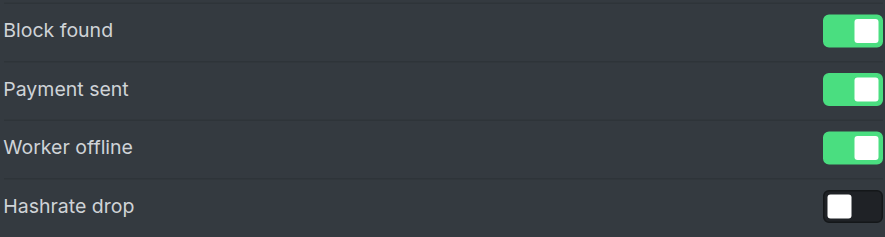
A watchdog that silently fails is worse than none. Turn on worker-offline notifications on your dashboard: if a rig goes quiet longer than your watchdog's recovery time, you get told, and a repeatedly flapping worker in the notification history is your sign the watchdog is masking a real problem worth fixing.